
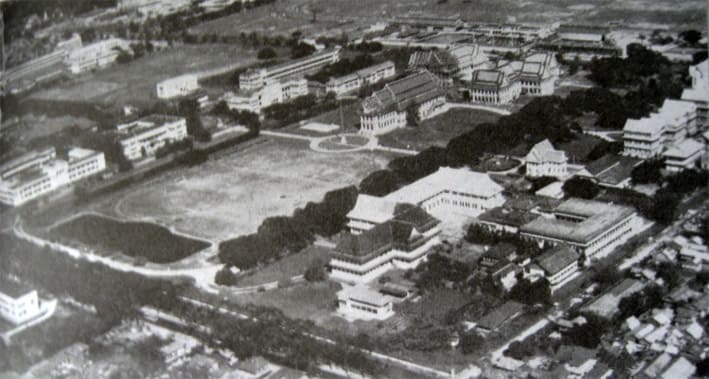
Regarded as a school that produces proficient science graduates since 1916, Chulalongkorn’s Faculty of Science, the third largest faculty of the university, offers graduate and undergraduate education in 14 departments. Since the establishment of the Faculty, over 10,000 students have graduated with Bachelor degrees. At present, the number of undergraduate and post-graduate students is more than 3,000 and 1,000 respectively.
The Faculty of Science has almost 400 academic staff supported by over 300 administrative staff and technicians. The faculty provides academic services through consultations, academic seminars, and technological development and transfer. Our courses and research are taught and supervised by outstanding faculty members who are at the forefront of biotechnological researches and innovations in Thailand.
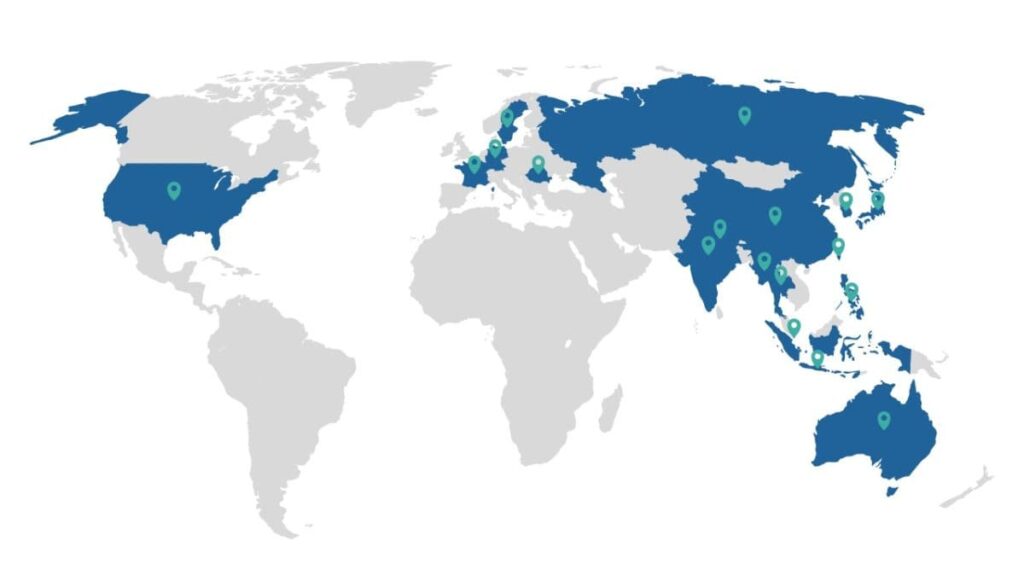
Exposure to diverse cultures across the world is an enriching experience that can foster intercultural learning. International and intercultural experiences can facilitate such learning, allowing individuals to broaden their perspectives and develop a deeper understanding of different cultural practices and values. At BBTech, students from various nationalities bring in a wealth of cultural diversity, which all students can be exposed to. This exposure to different cultures can help students develop intercultural competence and sensitivity, skills that are increasingly valuable in today’s globalized world. By engaging with diverse cultures, individuals can expand their horizons, challenge their assumptions, and build relationships with people from different backgrounds.
Thailand’s rich biodiversity presents a valuable opportunity for students to explore and study the natural world. With a wide range of plant and animal species, the country’s ecosystem offers a wealth of resources that can be utilized in various fields, including biotechnology. By taking advantage of Thailand’s diverse flora and fauna, students can conduct studies and experiments that can lead to the development of new medicines, technologies, and other innovations. With the interdisciplinary nature of biotechnology, students can also explore diverse areas such as applied immunology, genomics, and big data, which can enhance their understanding of different sciences. Thailand’s great biodiversity provides an excellent platform for students to deepen their knowledge and gain practical experience in biotechnology and other related fields.
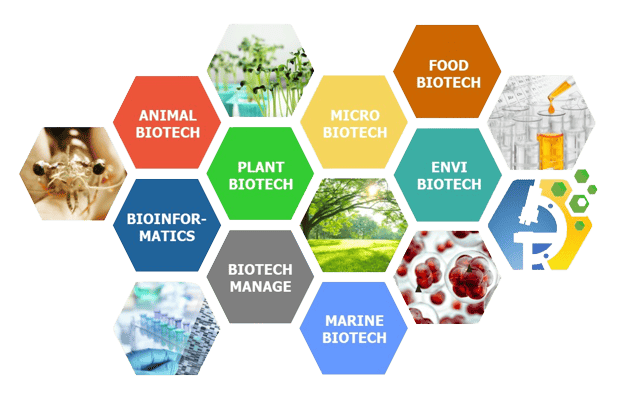
The program’s curriculum is flexible and offers various areas of specialization, allowing students to pursue their interests in the field. The program’s coursework and research opportunities cater to a diverse range of candidates with different academic backgrounds and interests in biotechnology. The curriculum is designed to equip students with practical skills and theoretical knowledge in various areas of biotechnology.
With access to state-of-the-art facilities and equipment, students have the opportunity to engage in hands-on research projects and gain valuable practical experience in their chosen area of specialization. The program’s emphasis on different areas of biotechnology provides students with a comprehensive understanding of the field and prepares them for a wide range of career opportunities in the biotechnology industry.
Animal biotechnology is a part of biotechnology in which molecular biology techniques are used to genetically engineer animals for the purpose of improve their desirability for agriculture, industrial, or pharmaceutical applications. Animal biotechnology has been used to generate genetically modified animals that better serve the demands of people.
Advances in animal biotechnology have been supported by current progress in sequencing genome, gene expression and metabolic profiling of animal cells. More recently, genome editing technologies (Zinc Finger Nucleases, TALENS, and CRISPR-Cas methods) have reveal new opportunities to simply create genetic variations in animals that can enrich their health and well-being and agricultural production.

INTRODUCTION TO MOLECULAR BIOTECHNOLOGY
Introduction to and history of molecular biotechnology; reviews on regulation of gene expression in prokaryotes and eukaryotes; principles and techniques in recombinant DNA technology; production of recombinant protein in prokaryotes and eukaryotes; mutagenesis, protein engineering and directed evolution; various applications of molecular biotechnology.
3(3–0–6)
BIOLOGICAL SEQUENCE ANALYSIS
Methods and algorithms for sequence alignment: pairwise sequence alignment, database similarity searching, multiple sequence alignment; profiles and Hidden Markov Models; gene finding and protein sequence analysis; processing of data obtained from DNA sequencers including assembly of raw data into a contiguous sequence, finding open reading frames and translating into amino acid sequences; sequence analysis tools used in recombinant DNA technology including restriction mapping, primer design, DNA cloning and mutagenesis; DNA, RNA and amino acid sequence analysis using publicly available web based tools.
3(2–2–5)
GENERAL GENETICS LABORATORY
Laboratory work emphasizing the principles of inheritance; experiments with microorganisms and an independent study of inheritance in Drosophila melanogaster and Zea mays; problems solving and discussion.
1(0–3–0)
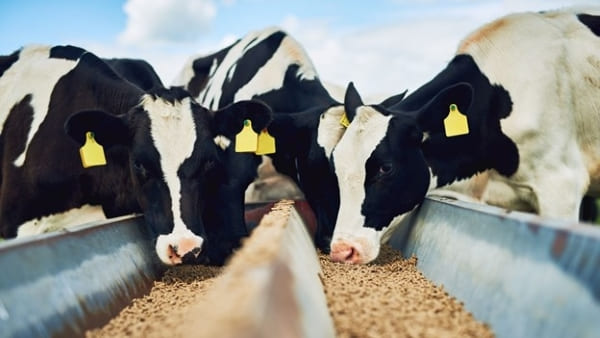
FRONTIERS IN ANIMAL BIOTECHNOLOGY
Improvement of animal products; animal biotechnological production; safety and quality assurance of animal-based production; industrial or pharmaceutical applications; farm animal biotechnology; animal genetics and breeding; animal nutrition; animal reproduction; the diagnosis of disease and vaccine development; tissue engineering; animal conservation.
3(3–0–6)
ANIMAL WELFARE AND BIOSECURITY
Animal ethics; law and welfare; management for biosecurity for animal use in research and biotechnology.
2(2–0–4)
BIOLOGY OF DISEASE
Immune system and immune responses, bacterial infection, viral infection, parasitic infection, helminth infection and fungal infection, poisonous animals, non-communicable diseases, cancer, and environmental pollution and impacts on health.
3(3–0–6)